
In today’s fast-paced world, many people are searching for natural ways to reduce stress, restore balance, and improve their overall wellbeing. One holistic practice that has continued to grow in popularity is Reiki therapy.
Reiki is a gentle, non-invasive energy healing practice designed to promote relaxation, emotional balance, and a greater sense of calm. While Reiki is not intended to replace medical treatment, many people use it alongside traditional healthcare and wellness practices to support their mental, emotional, and physical wellbeing.
What Is Reiki Therapy?
Reiki is a Japanese healing technique developed in the early 1900s. The word “Reiki” roughly translates to:
- “Rei” meaning universal
- “Ki” meaning life energy
Reiki practitioners believe that energy flows through all living things and that disruptions or imbalances in this energy may contribute to stress, emotional overwhelm, or feelings of discomfort.
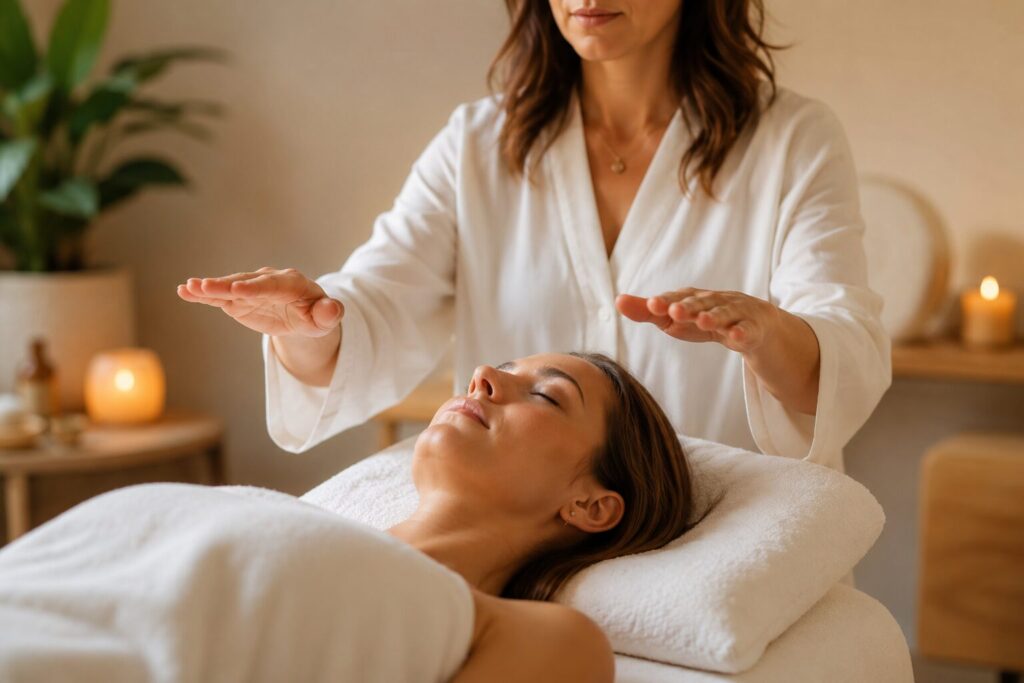
During a Reiki session, a practitioner uses gentle hand placements either lightly on or just above the body to encourage relaxation and energy balance.
What Happens During a Reiki Session?
A typical Reiki session is calm and deeply relaxing.
Clients usually remain fully clothed while lying comfortably on a treatment table in a peaceful environment. Soft music, dim lighting, and calming surroundings are often used to create a relaxing experience.
The practitioner gently places their hands on or above different areas of the body while focusing on supporting energy flow and relaxation.
Many people describe Reiki sessions as:
- calming,
- grounding,
- emotionally soothing,
- and deeply relaxing.
Some individuals report sensations such as warmth, tingling, emotional release, or a sense of inner peace during or after treatment.
Potential Benefits of Reiki Therapy
While everyone’s experience is different, Reiki is commonly used to support:
Stress Reduction
Reiki may help calm the nervous system and encourage deep relaxation.
Emotional Wellbeing
Many people seek Reiki during times of emotional stress, grief, anxiety, or overwhelm.
Relaxation & Sleep Support
Reiki sessions may help people feel more rested and relaxed.
Mind-Body Balance
Reiki aims to support emotional and energetic balance while encouraging self-awareness and mindfulness.
General Wellness
Some people include Reiki as part of their broader self-care and wellness routine.
Reiki Is a Complementary Therapy
It is important to understand that Reiki is considered a complementary therapy, not a replacement for professional medical or mental health care.
Many people choose to combine Reiki with:
- counselling,
- psychology,
- massage therapy,
- mindfulness,
- meditation,
- or conventional healthcare treatments.
A qualified healthcare professional should always be consulted regarding serious medical or mental health concerns.
Who Can Benefit From Reiki?
People seek Reiki therapy for many different reasons, including:
- high stress levels,
- emotional burnout,
- grief and loss,
- anxiety,
- emotional healing,
- self-care,
- relaxation,
- or simply taking time to slow down and reconnect with themselves.
Reiki is suitable for many people seeking a gentle, holistic approach to wellbeing.
What Makes Reiki Different?
Unlike some hands-on therapies, Reiki is non-invasive and focuses on creating a calming, supportive environment rather than physical manipulation.
Many people appreciate Reiki because sessions are:
- peaceful,
- gentle,
- flexible,
- and personalised to the individual.
The focus is often on helping clients feel safe, supported, and emotionally grounded.
Final Thoughts
Reiki therapy continues to grow as a popular wellness practice for people seeking relaxation, balance, and emotional support in their daily lives.
Whether you are exploring holistic wellness for the first time or looking to complement your existing self-care routine, Reiki may offer a calming space to pause, recharge, and reconnect.
As with any wellness service, it is important to seek a qualified practitioner and discuss any medical concerns with your healthcare provider.