
In today’s busy world, many people are looking for gentle, natural ways to relax, reduce stress, and support their overall wellbeing. Reflexology is one holistic therapy that has become increasingly popular for those seeking calm, balance, and self-care.
Reflexology is a non-invasive complementary therapy that involves applying gentle pressure to specific points on the feet, hands, or ears. Practitioners believe these points correspond to different areas and systems within the body.
While reflexology is not intended to diagnose or treat medical conditions, many people use it as part of their wellness routine to encourage relaxation and support general wellbeing.
What Is Reflexology?
Reflexology is based on the idea that different areas of the feet, hands, and ears are connected to various parts of the body through energy pathways and the nervous system.
A reflexologist uses targeted pressure techniques on these reflex points with the aim of encouraging relaxation, balance, and improved wellbeing.
Reflexology is often described as deeply calming and restorative, making it a popular choice for people wanting to reduce stress and unwind.
What Happens During a Reflexology Session?
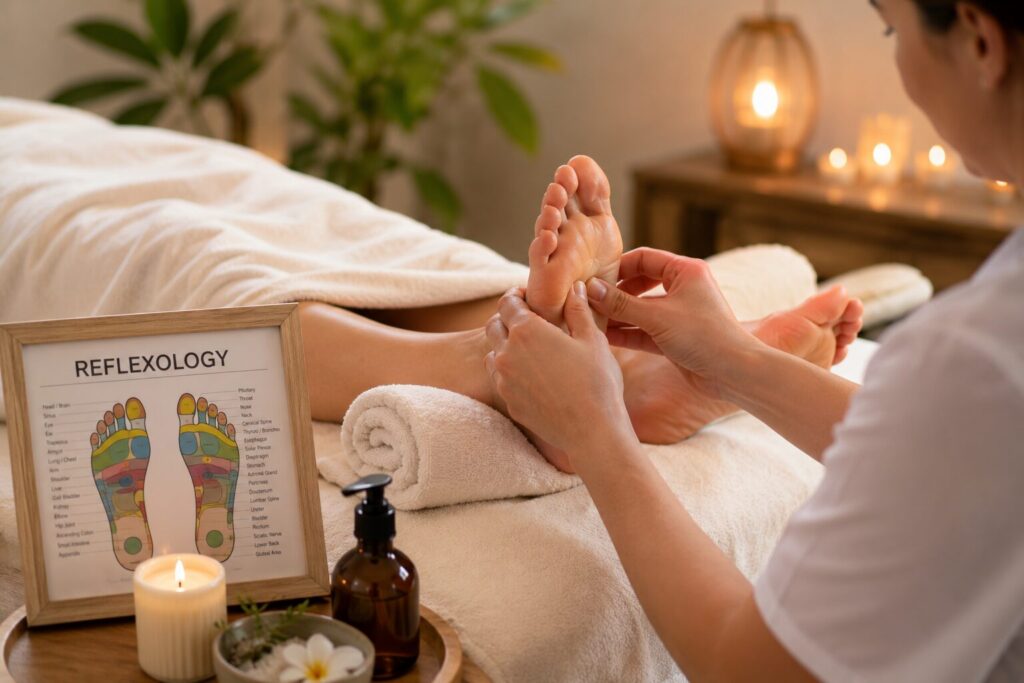
During a reflexology session, clients typically remain fully clothed while relaxing in a comfortable chair or treatment bed.
The practitioner gently applies pressure to specific areas of the feet, hands, or ears using their fingers and thumbs. Sessions are usually performed in a quiet, calming environment with soft lighting and relaxing music.
Many people report feeling:
- deeply relaxed,
- calmer,
- lighter,
- or more balanced after a session.
Some individuals may also notice temporary sensations such as warmth, tingling, or emotional release during treatment.
Potential Benefits of Reflexology
Although experiences vary from person to person, reflexology is commonly used to support:
Relaxation & Stress Reduction
Reflexology may help calm the body and mind while encouraging relaxation.
Improved Wellbeing
Many people use reflexology as part of a holistic self-care routine.
Sleep & Relaxation Support
Some individuals find reflexology sessions helpful for promoting relaxation before sleep.
Emotional Balance
The calming nature of reflexology may help people feel more emotionally grounded and balanced.
Mind-Body Connection
Reflexology encourages people to slow down, reconnect with themselves, and focus on overall wellbeing.
Reflexology as a Complementary Therapy
Reflexology is considered a complementary therapy, meaning it is generally used alongside traditional healthcare and wellness practices rather than as a replacement for medical treatment.
Many people combine reflexology with:
- massage therapy,
- counselling,
- meditation,
- yoga,
- Reiki,
- mindfulness,
- or general wellness routines.
Anyone with medical concerns should always seek advice from a qualified healthcare professional.
Who May Benefit From Reflexology?
People seek reflexology for many reasons, including:
- stress,
- emotional overwhelm,
- fatigue,
- relaxation,
- self-care,
- or simply taking time to slow down.
Reflexology may appeal to individuals looking for a gentle, holistic wellness experience that focuses on relaxation and balance.
What Makes Reflexology Different?
Unlike some wellness therapies, reflexology focuses specifically on reflex points in the feet, hands, and ears rather than full-body manipulation.
Many people enjoy reflexology because sessions are:
- gentle,
- calming,
- non-invasive,
- and deeply relaxing.
The experience is often described as peaceful and grounding.
Final Thoughts
Reflexology continues to grow in popularity as more people explore natural approaches to relaxation and wellbeing.
Whether used occasionally for relaxation or incorporated into a regular self-care routine, reflexology offers a calming opportunity to pause, recharge, and focus on overall wellness.
As with any complementary therapy, it is important to seek a qualified practitioner and consult a healthcare professional regarding medical concerns.